
These Were the Top Student Behaviors in the 22-23 School Year
Discover how educators use LiveSchool rubrics to track positive behavior, reward students, and improve SEL data with top categories and behavior examples.

Our schools have awarded millions of positive points, given out thousands of rewards, celebrated students, staff, and whole Houses for their positive actions, and improved behavior and SEL data throughout buildings and districts. The positivity is overflowing! ❤️
The LiveSchool Rubric
A big component of this data is looking at the most recorded categories and behaviors in LiveSchool. The points that staff award students from their school-wide rubrics in LiveSchool are all tracked in our Insights data for schools to monitor and review. The rubric is organized by category and behavior.
What are Rubric Categories in LiveSchool?
Schools organize their rubrics by creating categories. These are the sections where they will set up point opportunities for their students. The categories are typically named based on a school’s behavior program, their whole-wide expectations, and/or what they need to track in LiveSchool. Some examples include
- Self-Management
- Excellence
- Safety
Click here to see more examples
What are Rubric Behaviors in LiveSchool?
The rubric behaviors are what schools are reinforcing/tracking in LiveSchool. These are the behaviors that they want to see from their students or if it’s a negative behavior, then they want to gather data to see how often it is occurring. Examples of rubric behaviors include:
- Prepared for Class
- Appropriate Hallway Behavior
- Helping Others
Click here to see more examples
How to Plan Your LiveSchool Behavior Rubric
There are many different ways to organize your behavior rubric. Here are a few tips for where to start:
- Organize your rubric. Will it be values-based, location-based, or based on grade level? Learn more about these three options here.
- Use positive language. Rather than having a behavior that says “Poor Hallway Behavior”, you can change it to “Followed Hallway Expectations”.
- Will you be tracking negative behaviors? If not, then your rubric will only include positive points.
- Get feedback from all stakeholders. Share your rubric draft with students, families, and teachers and hear from them about what they are wanting to focus on.
- Make edits. This rubric is a working document and can be edited at any time. If you notice that there is an increase in a certain type of behavior during the year, you can update your rubric to reinforce the positive side.
The Most Popular Behavior Categories & Rubrics in LiveSchool
To reflect on the past year, we’ve compiled the top 10 categories and behaviors that received the most positive points across all schools using LiveSchool.
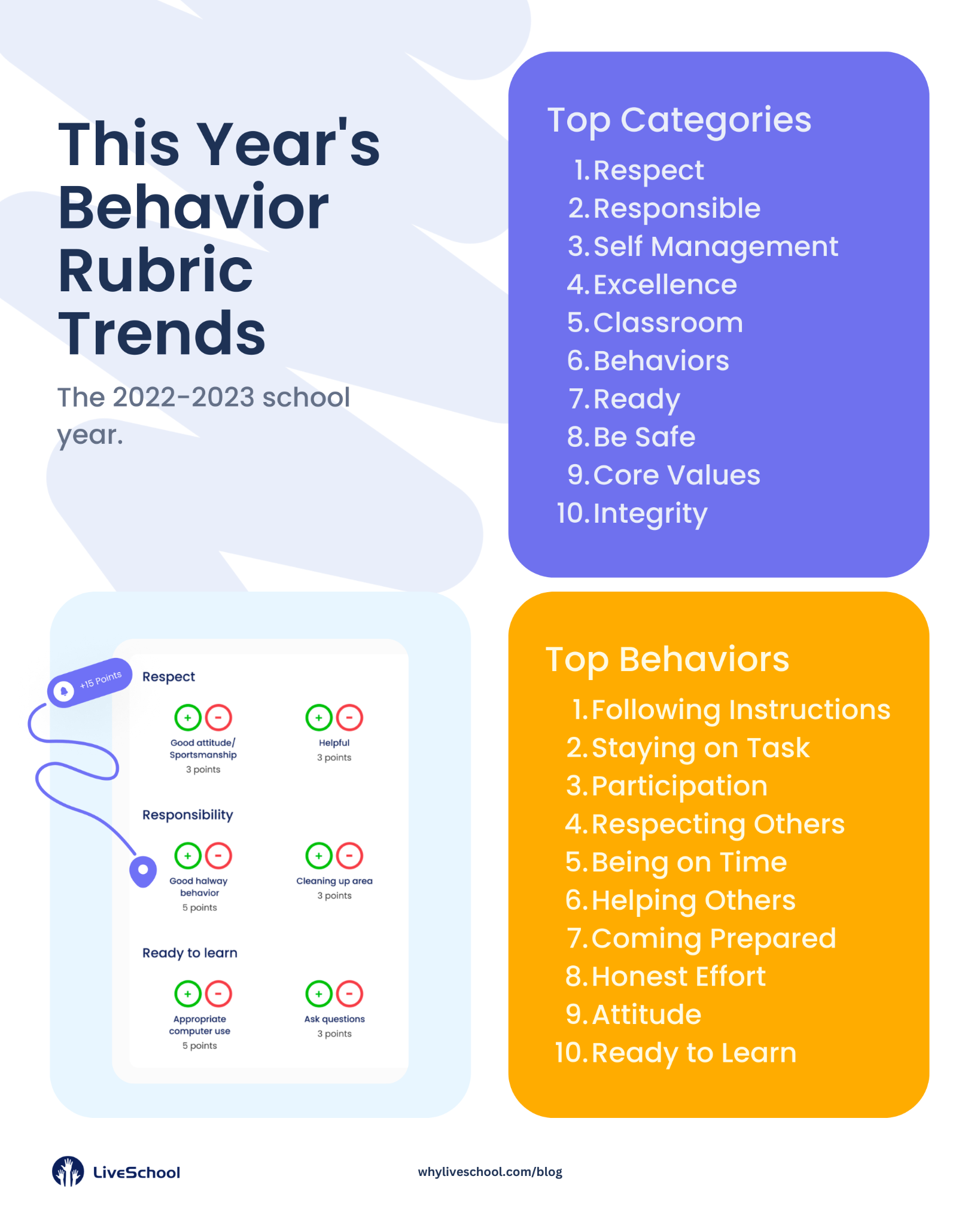
We can see in the data that the three R’s are common categories:
- Respect: This would include behaviors like respecting others, respecting yourself, keeping hands to yourself, etc.
- Responsible: Behaviors in this category are focused on how students show responsibility like preparing for class, area prepped to leave, and following instructions.
- Ready: The behaviors to look for can include being on time, appropriate computer use, and attentive listening.
Also, we see that our schools are reinforcing a growth mindset and encouraging a supportive, positive environment with the following behaviors:
- Honest Effort
- Positive Attitude
- Helping Others
Woohoo! That’s what it’s all about!
Related posts
Flip Behavior Problems to Positives: A Practical Guide for Schools
Reframe your behavior challenges into proactive PBIS expectations.

How the Student Government at Bronx Compass High Built Excitement for Schoolwide Points and Rewards
Learn how student government at Bronx High sparked excitement for behavior points and rewards.

10 Principals Share How they Built Teacher Buy-In for Behavior Points
Create teacher buy-in for behavior points, improving school culture with collaboration, support, & incentives.