
How Beasley Elementary Cut Hallway Referrals from 32 to 2 – One Goal at a Time
Beasley Elementary in Lamar CISD cut hallway discipline referrals from 32 to just 2 and eliminated specials class incidents entirely – by starting with one focused goal and getting every teacher rowing in the same direction. A $5,000 rewards budget, a marketing-inspired delivery schedule, and giant teddy bears did the rest.
“All behavior is communicating something. You got to get to know the student, got to get to know the home life, and what frightens them, what makes them laugh – to be able to connect with them.”
On this page
Watch the Story
Files Full of PBIS, None of It Real
When Laura Spiegel became assistant principal at Beasley Elementary in Lamar CISD, she started digging through the files she’d inherited. References to PBIS were everywhere – plans, templates, old presentations. But when she looked around the building, nobody was actually doing any of it. The program had been rolled out years earlier and simply faded away.
Laura’s own instinct was to talk things through. When a teacher sent a student to her office, she didn’t reach for the discipline code. She’d ask: tell me what made you do that. Tell me how you felt afterwards. Tell me how you think other people felt. Most of the time, the student came to their own realization that it wasn’t cool. Laura thought this was working.
Then the feedback started coming. Teachers told her she wasn’t giving real consequences. The pushback was clear: something more structured was needed – not to replace the conversations, but to shift the mindset around behavior from punishment to recognition. When the district announced it wanted every school to focus on true PBIS implementation, Laura saw her opening.
Her data told her where to focus. Behavior incidents clustered in three areas: hallways, specials classes, and recess. Most schools would have tried to tackle all three at once. Laura had watched enough well-intentioned programs collapse under their own ambition to know better.
One Hallway at a Time
Laura formed a PBIS committee with one person from every grade level and specials team. Then she made a promise that would define the entire effort: “I’m not going to make any decision outside of this committee.” No blanket directives, no top-down mandates. Every change would be discussed, debated, and agreed upon before it touched a single student.
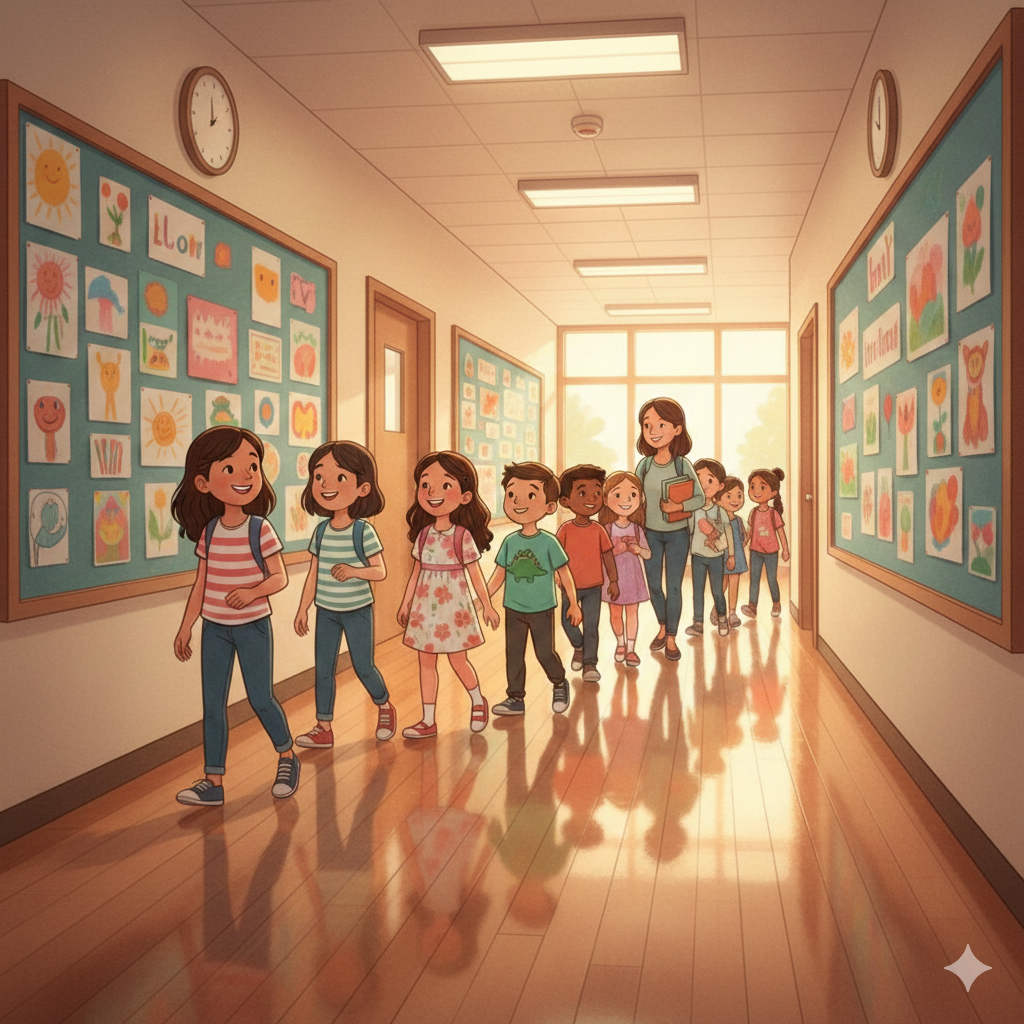
The committee’s first decision was to choose just one of the three problem areas. Recess was a nonstarter – that’s kids’ time to be kids. Specials happened behind closed doors without cameras. But hallway transitions were short, observable, and solvable. Teachers only had to be focused for the one-minute walk from classroom to classroom. It didn’t ask anyone to change their instructional approach.
Laura describes the strategy through a vacation canoe trip with friends. She was in the front rowing furiously, convinced they were in a race. When other boats started passing them, she looked back to see why. Her husband, right behind her, was paddling the wrong direction because he’d spotted a photographer. Their friend’s wife didn’t know how to row at all. And the friend in the very back had lost his oar entirely and was just taking in the scenery.
The lesson carried straight into the school: get everybody on the same page first, rowing the same direction. Then whatever you do is going to go smoothly. Starting small with hallways gave teachers quick wins. The workload was minimal. And when results started showing, the momentum to tackle the next area built naturally.
Giving Specials Teachers Skin in the Game
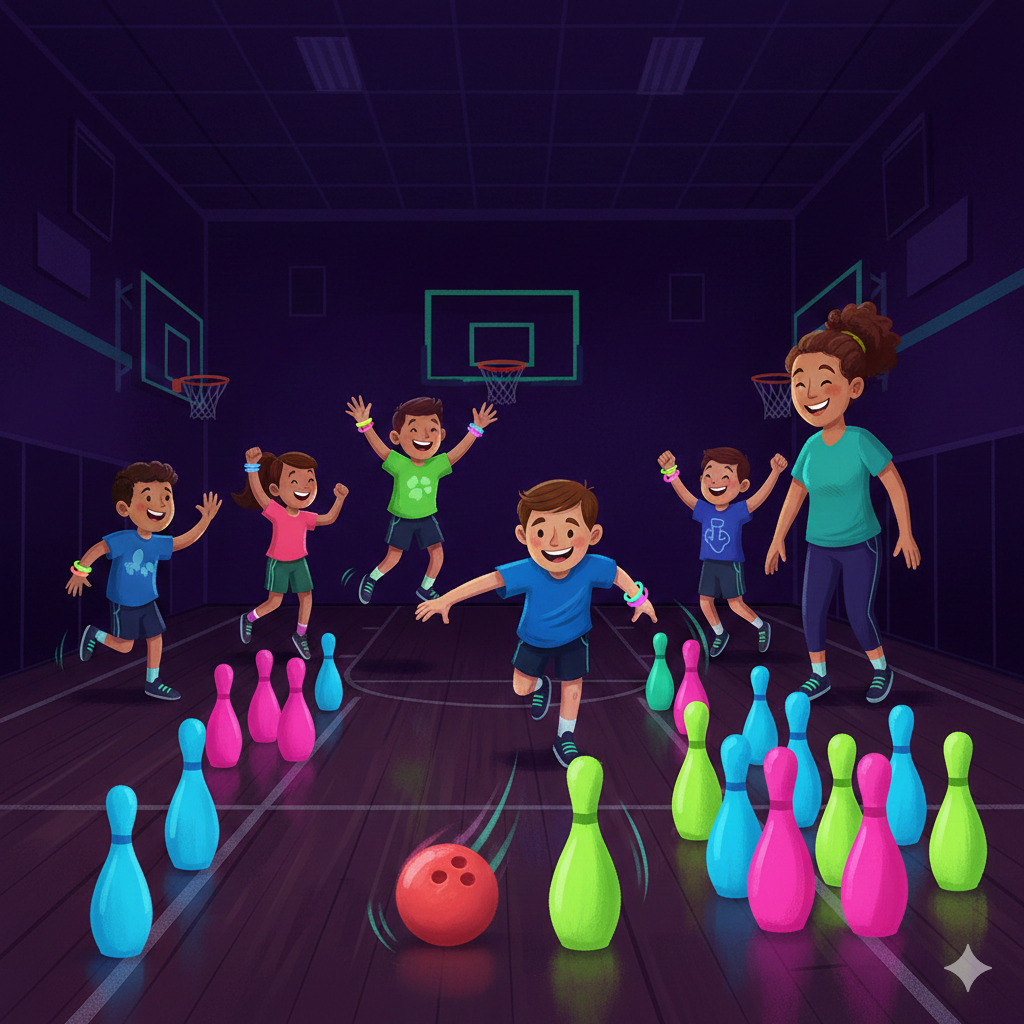
The first-year points party was memorable for the wrong reasons. Face painting, giant tic-tac-toe, glow-in-the-dark bowling – the kids loved it. The adults did not. Too many students crammed into one space, too much chaos at once. But the real turning point came when a specials teacher stopped by, pointed at a student celebrating with friends, and said: “That kid got to go to the party? How’s that?”
The student had earned enough hallway points to qualify despite being difficult in specials. The system had a gap, and the specials teachers felt it acutely. They had no say in who earned what. When a homeroom teacher dropped off students and walked away, the person tracking and awarding points was gone – and the students knew it. Behavior in specials deteriorated the moment the classroom teacher turned the corner.
Laura brought the specials teachers to the committee table and asked what it would take to get them invested. Their answer was direct: give us a say in the points. The negotiation that followed was revealing. Specials teachers initially wanted to award nine points per session – their reasoning being that students spend a single minute in the hallway versus 45 to 50 minutes with them. Laura pushed back: shifting the pendulum that far would undermine everything they’d built in the hallways. They settled on three points per session.
The deal came with structural changes. Students now go straight into the specials classroom instead of waiting in the hallway. Each specials teacher got their own LiveSchool account. The three points covered everything from arrival to cleanup. And the specials teachers volunteered to host the reward parties – a PE glow-in-the-dark party, a STEM building challenge, a Mario Kart gaming session, and an art party with activities students never normally got to try. The parties happened during specials time, so they didn’t cut into content instruction. Students could earn up to 15 points each week just by doing what they were supposed to do.
Teddy Bears, Prize Carts, and Tuesday Marketing
Beasley invested $5,000 in their rewards budget and made every dollar work double duty. The signature item was a nearly six-foot-tall giant teddy bear – so big you can’t get your arms around it. The school bought four of them, and they became unofficial mascots. Laura brought the bears onto video announcements, arms wrapped around her while delivering the morning news. Students talked about the teddy bears constantly, strategizing how many points they needed to earn one.

Beyond the bears, the rewards store stocked Lego sets, Dash robots, Pokémon cards, PlayDoh, and smaller items at every price point. Students felt real ownership – these were their points to spend, and they treated them like money.
But Laura’s real innovation was in timing. Beasley’s attendance dipped most on Mondays and Fridays. Drawing on her first career in sales and marketing, she applied a principle any restaurant owner would recognize: offer your best deals on your slow days.
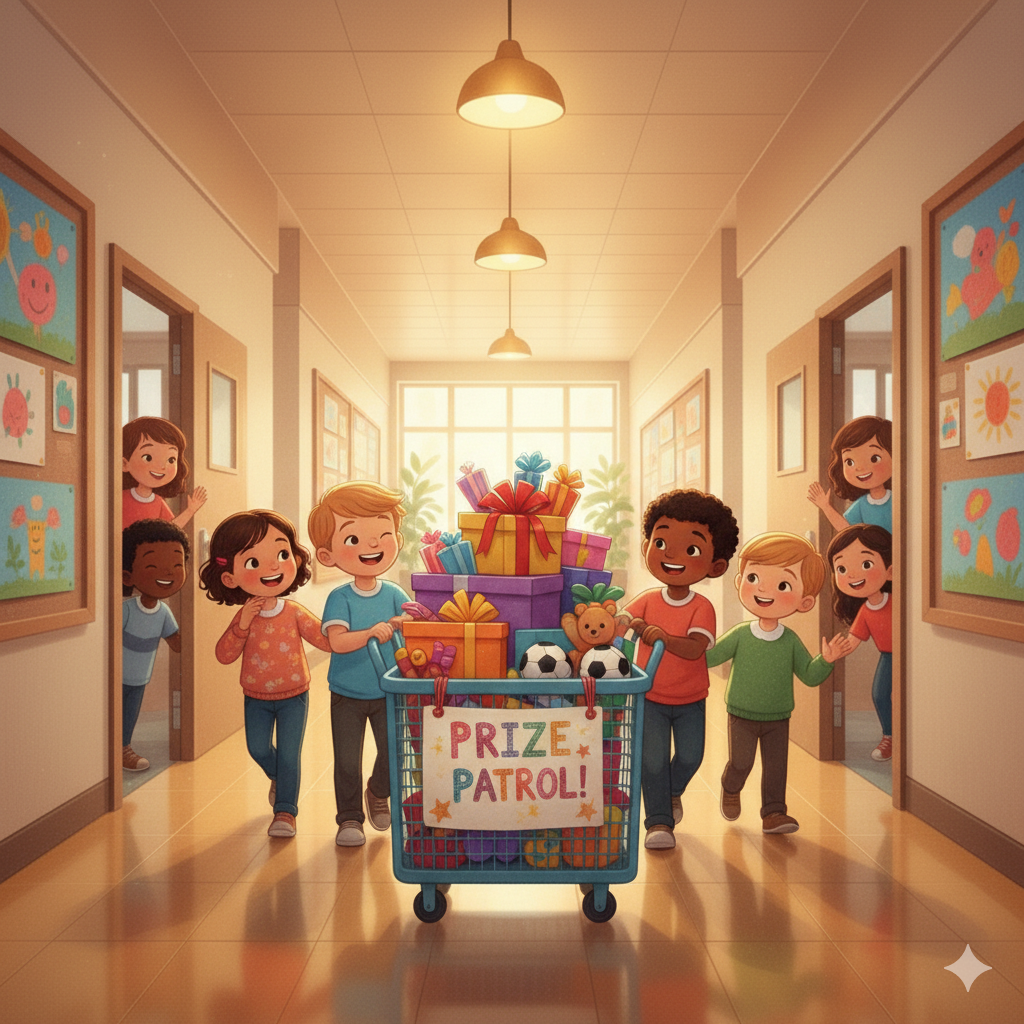
Students could only request prizes on Mondays before school, between 7:00 and 7:30 AM. At 7:29, the order table vanished. Prizes were then delivered on Fridays by fifth graders pushing a cart through the building. If a student was tardy on delivery day, the prize went back on the shelf until next Monday.
The attendance bonus added another layer: five consecutive days present earned three extra points. Students who might have told their parents their stomach hurt on a slow morning now had a reason to push through. And for the chronic problem of lost smart tags – the district-required ID badges that students kept misplacing – the committee landed on a simple solution: one point for anyone who still had their tag around their neck at the end of the day.
Two Incidents
In the year before focused PBIS implementation, Beasley logged 32 hallway discipline referrals. After two years of consistent, targeted work:
Two.
A 94% reduction – achieved not through stricter rules, but through a system where students wanted to earn recognition for doing the right thing.
Even more striking: specials classes, once one of Beasley’s biggest problem areas, recorded zero discipline incidents. The same teachers who once felt powerless became the program’s most enthusiastic advocates.
District visitors started noticing. Staff from central office who came to observe reading groups or sit in on math planning would walk through the hallways and ask what the school was doing differently. Laura’s response was matter-of-fact: no, they didn’t know anyone was coming. This is just how things are now.
The most telling sign came from inside the building. Classroom teachers – the same ones who once pushed back against Laura’s conversational approach to discipline – started asking the committee if they could bring the point system into their own rooms. The committee discussed it but decided the answer was not yet. Every teacher runs their classroom differently, and without consistency, points would mean different things in different rooms. For a school that had built its success on doing one thing right before moving to the next, that was a problem worth avoiding until they were ready.
Your School’s Turn
Beasley Elementary’s transformation offers a playbook for any school building a PBIS program:
- Start with one area. Don’t try to fix everything at once. Pick the most observable, solvable problem and build momentum from there.
- Use a representative committee. One person from every grade level ensures buy-in and gives everyone a voice before decisions roll out.
- Give stakeholders ownership. Specials teachers went from resistant to enthusiastic once they had input on points and hosted their own events.
- Target your weak spots creatively. Monday/Friday reward scheduling addressed attendance problems right where they occurred.
- Preach consistency. If one teacher doesn’t follow the system, students lose hope – and it spreads.
All behavior is communicating something. You’ve got to get to know the student, get to know the home life, what frightens them, what makes them laugh – to be able to connect with them.
The giant teddy bears and glow-in-the-dark parties are fun. But at its core, Beasley’s success comes from a belief that every child deserves to be recognized for doing the right thing – and a team disciplined enough to start small, stay consistent, and build from there.
More stories you might like
How Hutchinson Elementary Reduced Suspensions by 40% with PBIS and Monthly Teacher Coaching
Assistant Principal Chalise Long didn’t just hand teachers a new tool – she built a structured coaching cycle around it. With 90-minute pre-service PD sessions, monthly data reflections, and midyear one-on-one conferences, Hutchinson Elementary cut suspensions from 10% to 6% and lifted math and reading proficiency by 8%.
How Taylor Middle School Went from Zero Positive Data to 98% Attendance
Once labeled one of the worst middle schools in the community, Taylor Middle School in Lovington, New Mexico rebuilt its culture through five years of PBIS implementation. The school now awards over 163,000 points per year, has 94% of staff actively recognizing students, and holds approximately 98% daily attendance.
How PS/IS 119 Made Every Adult a Point-Giver and Raised Student Belonging 14%
When Principal Asia Robinson Atkins arrived at PSIS 119 in Queens during the pandemic, she found a K–8 school of nearly 1,300 students where third graders didn’t know seventh graders existed. She built a four-house system, recruited four teacher-coordinators, and gave every adult in the building – from kitchen staff to school safety agents – the power to award points. In year two, student belonging rose 14% and the school recorded 218,000 positive behavior points.