
How Global Academies Used 28K LiveSchool Points to Build a Cohesive PBIS Program
Before building their behavior system, Global Academies asked one question: what makes us us? The answer shaped a PBIS program that 1,300 scholars in West Philadelphia experience not as something imposed on them, but as an extension of the culture they already live in.
“We can’t do anything without building relationships. That includes all of our stakeholders – parents, administrators, teachers, community members, clergymen, politicians.”
On this page
Watch the Story
What Makes Us Us
As the Director of Student Achievement and PBIS Coordinator at Global Academies – a network of two charter schools in West Philadelphia serving 1,300 students from kindergarten through eighth grade – Paul Kennedy knows that any behavior program has to be built on something deeper than rules and consequences.
At Global Academies, students are called scholars and addressed as kings and queens. Every morning begins with Harambee – a gathering rooted in African tradition where the community comes together for the Pledge of Allegiance, school pledges, announcements, and recognition. A Sankofa fact of the day teaches scholars to “reach back to move forward” – learning from history to inform the future.
Each month is dedicated to a Jewel – a character trait chosen for its timing. Caring in December, when giving is in the air. Resiliency in January, when the school remembers a 2012 fire that destroyed their building and the four months they spent without one. Diversity in February for Black History Month.
Sixth graders follow the journey of Dr. Martin Luther King Jr. from Washington, D.C. to Memphis. Seventh graders trace Harriet Tubman’s path along the Underground Railroad into Canada. Eighth graders study the trans-Atlantic slave trade with trips to the Caribbean. The school has taken scholars to Jamaica, Haiti, Kenya, and China.
So when it came time to formalize a behavior system, Paul and his team didn’t go shopping for a program to install. They built one that could only exist at Global Academies.
Seven Pillars
Global Academies stands on seven foundational pillars established when the school was reimagined in 2006: Climate, Culture & Safety. Scholar-Center Decision Making. Culturally Relevant Exposure. Academic Rigor. Building Relationships. Sustainable Systems. Consistent & Intentional Reflection.
These aren’t aspirational posters. They’re a decision-making framework that touches everything.
“Let’s just say I have a program and I think it’s the greatest program ever,” Paul says. “The principal might say, ‘Hey Mr. Kennedy, is that program sustainable?’ She might say, ‘Does that have enough academic rigor?’ Not only are these the pillars we stand on – it’s actually part of our language.”
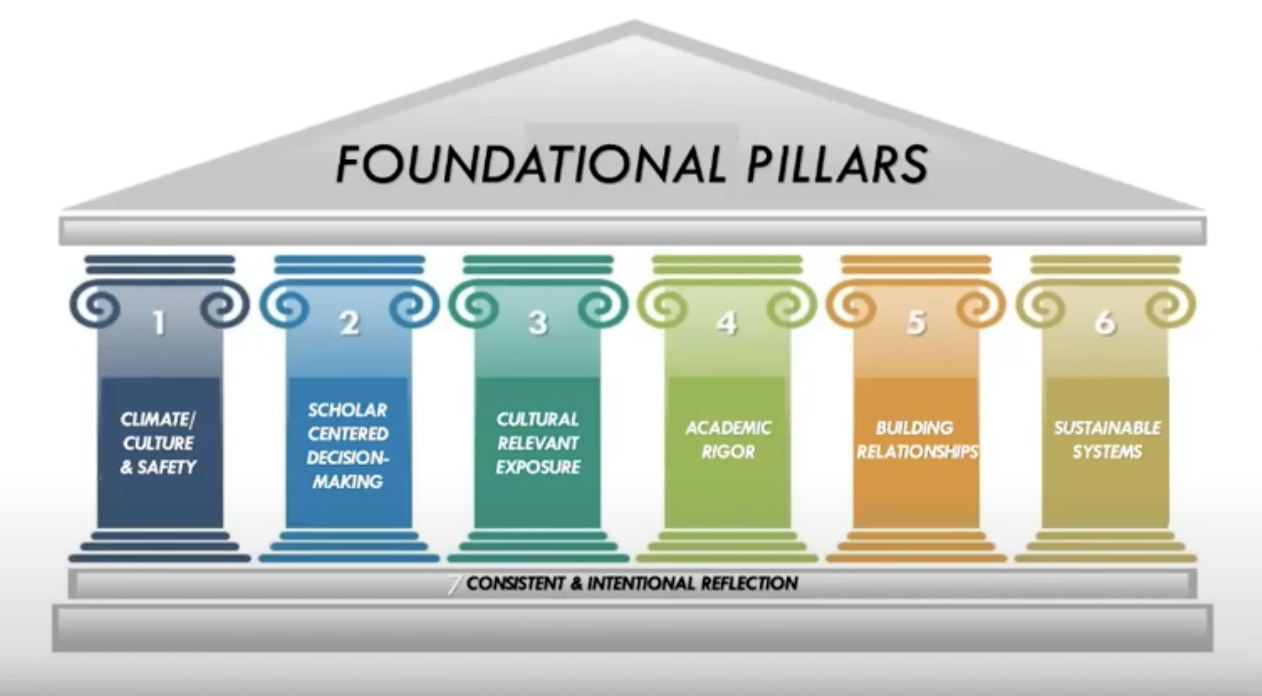
Every Wednesday, small learning communities hold meetings where these pillars are actively discussed. Is this culturally relevant? Is it safe for scholars? Does it build relationships? Are we reflecting consistently?
When it came time to build a behavior framework, three pillars rose to the top: Building Relationships, because nothing at Global works without them. Climate, Culture & Safety, because every decision had to protect what made the school special. And Consistent & Intentional Reflection, because any system that isn’t regularly evaluated will eventually break.
Global Greatness
Global Academies had been doing the right things since 2006. The culture was intentional. The relationships were strong. But Paul saw a gap: they had never formalized a behavioral structure.
“These are things that we’ve been doing since we opened up the school,” he says, “but we never had a structure.”
In 2019, they adopted PBIS and branded it Global Greatness – choosing words the school already used daily. “You always hear us say you are great, you’re standing in your greatness. The double consonant title just flowed.”
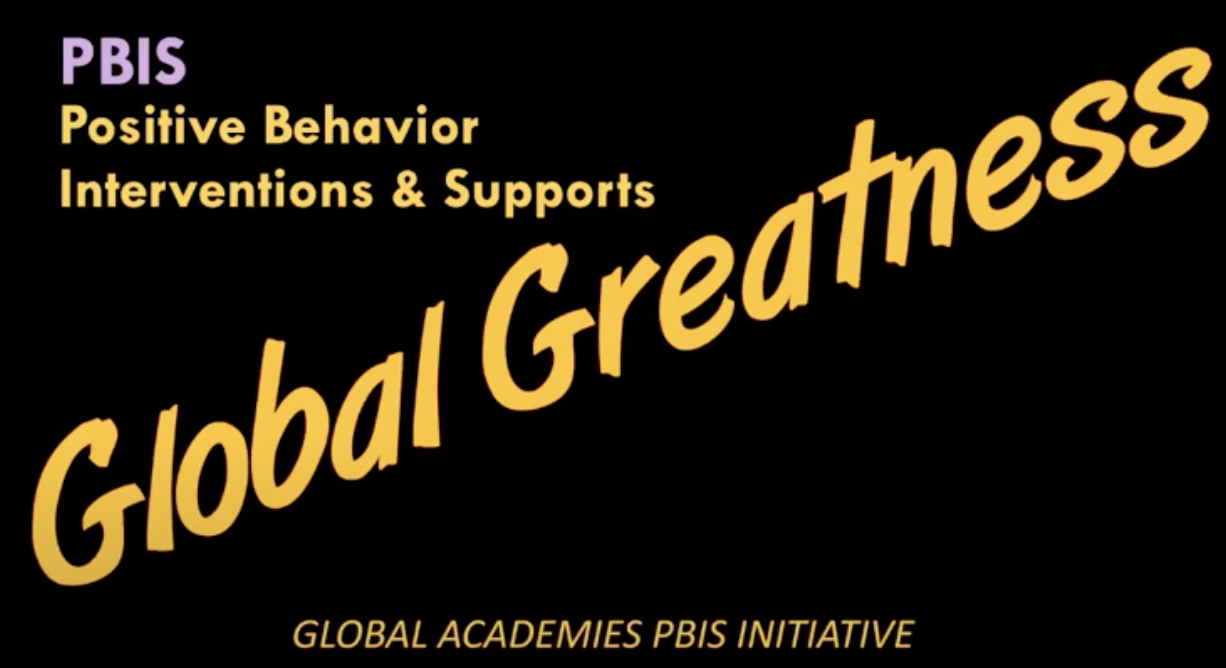
The tagline: Leaders with integrity show Responsibility, Respect, and Safety. Each value mapped to the foundational pillars. Responsibility reflected scholar-center decision making. Respect tied to building relationships. Safety aligned with the school’s dedication to a positive climate.
The team built a behavior matrix defining expected behaviors for every area of the school – dismissal, hallways, bathrooms, Harambee, the cafeteria, the auditorium, and even virtual learning, which was added during the pandemic. Posters featuring Globy the Gator – the school mascot – went up in every location.
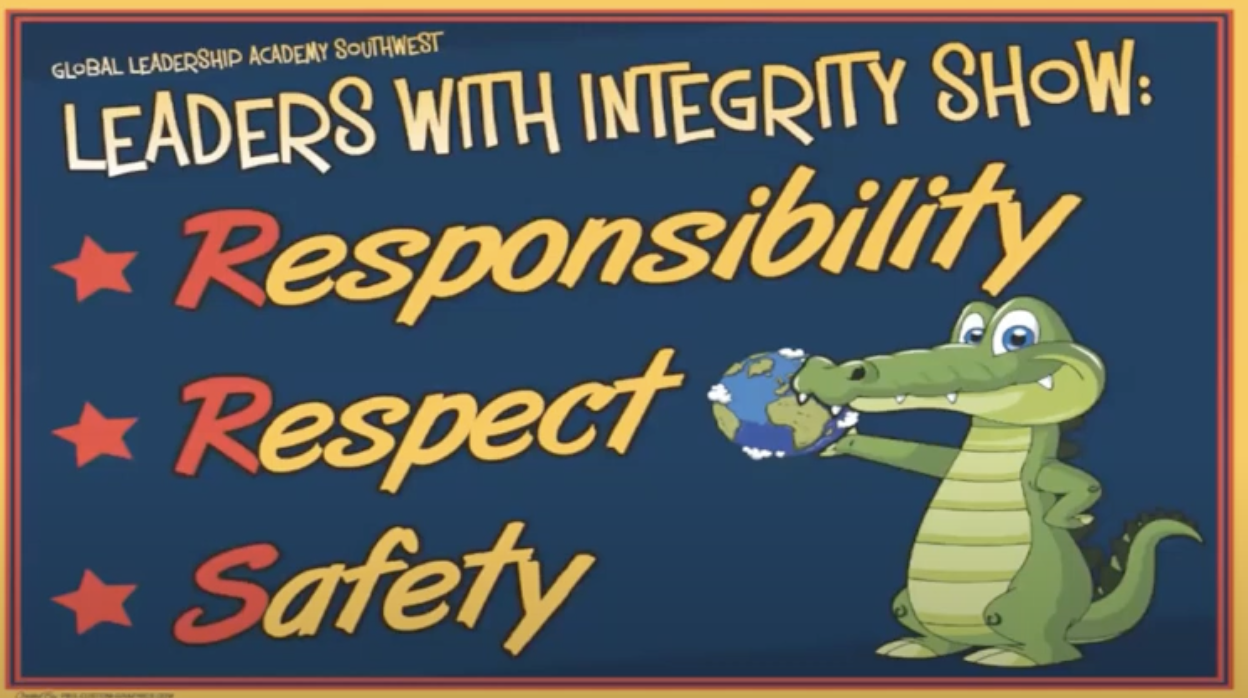
“We want our scholars to know: in this particular space, at this particular time, I see Globy and Globy is saying something,” Paul explains. “Even before they can read the words, they know this is a safe place.”
They wrote lesson plans for each space. When teachers teach auditorium norms, they take scholars to the auditorium. When they teach hallway expectations, they walk the halls together. “We’re giving them the template,” Paul says. “All they’re doing is following the template.”
LiveSchool Without the Red
Paul had been using LiveSchool in his own academy for years – his colleagues called him “the LiveSchool guy.” He’d build fake rosters and create test scholars just to learn every feature. Last year was the first time it went schoolwide, and the team was deliberate about how.
One significant decision: Global Academies stopped assigning negative LiveSchool points. “There were too many students that became very temperamental when they would hear that sound or see that red come up,” Paul explains. The emotional reaction was counterproductive.
Instead, they still document negative behaviors in LiveSchool for data purposes – but scholars don’t lose points. When reports go home, parents see the full picture: both the positive points earned and any behaviors documented. The scholar just isn’t penalized in their balance.
For tracking more serious behaviors, the school uses a separate system called Branching Minds. Together with LiveSchool, the two platforms allow the team to pinpoint exactly when and where behavior trends are emerging. “If we see a spike in fifth-grade behaviors, we can pinpoint what time the behaviors are taking place, where they’re taking place,” Paul says. “We can come up with different interventions to rectify them.”
When the Schoolwide System Isn’t Enough
Even with strong Tier 1 supports, some scholars need more. Global Academies added two targeted Tier 2 interventions – both with built-in exit strategies.
Check-In/Check-Out pairs scholars with a mentor for daily goal-setting. Each period, scholars score themselves on a zero-to-three scale – three means all goals met, zero means none. Over an eight-period day, 24 points are possible. Scholars need to hit 80% of their goals. After six weeks, the team evaluates whether the intervention is still needed – and exits scholars who’ve met their targets. For lower-school students, the point scale becomes smiley faces.
Breaks Are Better gives scholars two passes per day to take a self-directed break. “A lot of us don’t understand – when you take a break, there’s actually a process,” Paul says. “They’re de-escalating. They’re walking down the hallway. They’re thinking about what they’re doing. They’re drinking the water and still thinking. Walking back, they’re taking deep breaths, figuring out: when I go back in, this is not going to happen again.”
Scholars choose when to use their breaks, putting them in control of their own regulation. Both programs were chosen specifically because they align with the foundational pillars – Check-In/Check-Out builds relationships through mentorship, and Breaks Are Better protects the safe learning environment.
Paul’s team is careful about selection. “Let’s keep in mind what scholars can be chosen,” he told his team recently, “but let’s not choose any scholars yet – because scholars mature and change over the summer.”
Scholars Lead the Way
True to their foundational pillars, Global Academies involves scholars in nearly everything. Teachers offer choice boards for assignments – draw a picture, write an essay, create a rap, reenact a scene. Paul puts out surveys before LiveSchool parties: “Here are your three choices for the theme. Vote.” When the school store needed a name, scholars nominated and voted. The Gator Swamp won.
Restorative circles after conflicts aren’t teacher-run. They’re scholar-led. “It’s almost like peer mediation,” Paul says, “but instead of having one person, you have the whole collective as part of the conversation.”
This works because many of Global’s scholars are lifers – arriving in kindergarten and staying through eighth grade. “Even when they leave us,” Paul says, “whether they’re in ninth grade or twenty-five years old, you can see they’ve had the same type of journey. Their language is almost the same. The way they see the world is the same.”
Monthly Jewel Assemblies – where scholars wear their jewel’s color – double as LiveSchool award ceremonies. Star scholars who amass the most points are recognized. Character awards are given. Field trips to historic sites like the Belmont Mansion have been earned through accumulated points. For Harriet Tubman’s 100th birthday, scholars walked 200 steps around school for bonus LiveSchool points.
None of this stopped during the pandemic. Twin day went virtual. Crazy hat day went virtual. Scholars designed their Zoom backgrounds to look like Caribbean islands and presented them in class.
“It allows us to be one train,” Paul says. “You might be in a Branching Minds car, you might transition to a LiveSchool car, you might go up to the Tier 2 intervention car – but you can move from car to car because of our framework.”
More stories you might like
How the City of York Built a District-Wide Culture of PRIDE Across Every School
The School District of the City of York rolled out LiveSchool across every campus from PreK through 12th grade, giving students, staff, and families a shared language built around PRIDE. The result: seamless transitions between schools, data-driven coaching for teachers, and creative reward events that cost almost nothing.
How Orr Learning Academy Turned Zero Dollars into a K-12 Rewards Store
At this K-12 alternative learning environment in Fort Smith, Arkansas, assistant principal Ryan and behavior specialists Helen and Richard Brown built a fully stocked rewards store with zero budget – funded entirely through Amazon wish lists, local business donations, and a monthly distributor. With 115 students earning up to 100 LiveSchool points a day, the store now operates twice a week per division and has expanded to include staff recognition.
How Taylor Middle School Went from Zero Positive Data to 98% Attendance
Once labeled one of the worst middle schools in the community, Taylor Middle School in Lovington, New Mexico rebuilt its culture through five years of PBIS implementation. The school now awards over 163,000 points per year, has 94% of staff actively recognizing students, and holds approximately 98% daily attendance.