
How Heights Elementary Built K–5 PBIS with Houses and a Book Vending Machine
Heights Elementary didn't try to do everything at once. Over four years, intervention specialist Bryana Van Helden and her team layered PAWS expectations, a reward economy featuring snow cone machines and a book vending machine, and a house system that unites 1,200 students – earning Platinum PBIS status along the way.
“If we don't know them, we can't support them. We can't celebrate them.”
On this page
Watch the Story
The Snow Cone Standard
Heights Elementary started its PBIS journey in the 2019–2020 school year. Rather than launching everything at once, they made a deliberate choice: roll out slowly, adding components each year so teachers never felt overwhelmed.
By year four, that patience had produced something remarkable. The school earned Platinum status from the Florida PBIS Project – the highest recognition a school can receive. And the reward economy that keeps students engaged has become elaborate enough that Van Helden jokes about her new career path.
“I have become almost a carnival worker,” she says. The school purchased both a popcorn machine and a snow cone machine. When Van Helden fires up the popcorn maker, teachers come running from down the hall. When students cash out points for snow cone parties in the bus loop, some are experiencing a snow cone for the very first time.
“Seeing that magic of what a snow cone is – either the amazement or maybe the letdown for some of them – has been awesome,” she says.
PAWS Expectations Everywhere
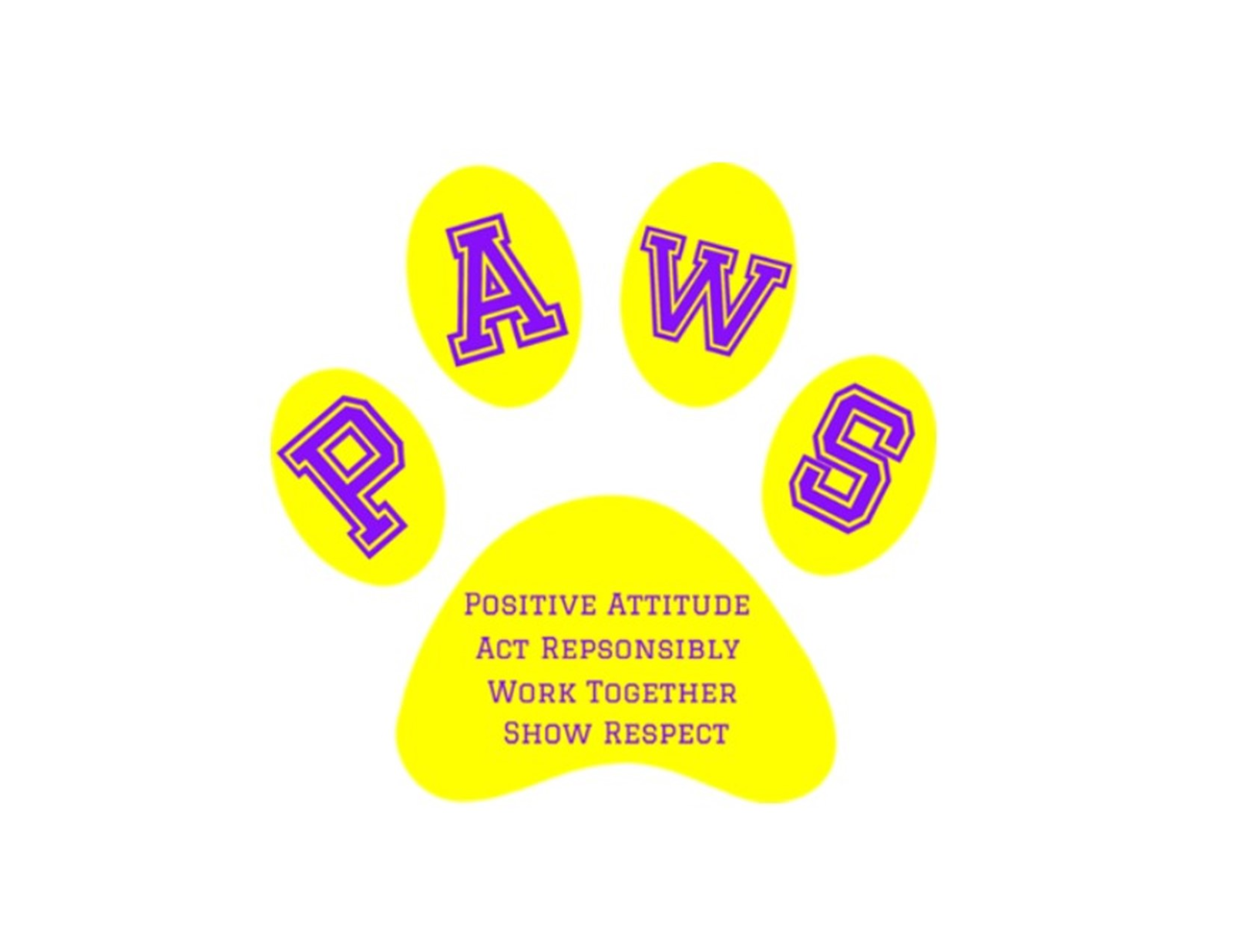
Heights’ mascot is the Panther, so their schoolwide expectations spell PAWS: Positive Attitude, Act Responsibly, Work Together, Show Respect. These four expectations are consistent from kindergarten through fifth grade, across every setting in the building.
But the team recognized that the same expectation looks different depending on where you are. Working together in the cafeteria is not the same as working together in the classroom. Showing respect in PE looks different than showing respect in the library. So they adapted the PAWS rubric for each setting – hallways, bathrooms, the media center, enrichment areas – while keeping the core expectations constant.
At the beginning of each year, teachers take it a step further. They sit down with their students and create essential agreements for the classroom – centered on the PAWS expectations but co-authored by the class. How can we show respect to one another? How can we act responsibly in this room? The answers come from the students themselves.
This matters because Heights is also an IB school, where student voice, choice, and ownership are built into the philosophy. The IB learner profiles – principled, balanced, inquirer, thinker, communicator, knowledgeable – map directly onto the PAWS framework. The school doesn’t treat PBIS and IB as separate programs. They’re one system with a shared vocabulary.
The Reward Economy
The reward system at Heights runs on multiple layers. Weekly and monthly rewards keep motivation steady, while big-ticket seasonal events give students something to save for all year.
In the cafeteria, students can cash out points to spin a Wheel of Choices in front of the whole room – different prizes on each wedge, maximum drama. The school also purchased a book vending machine: students earn a token, drop it in, and a book comes out. It’s one of the most popular redemptions on campus.
Popcorn and snow cone parties happen by grade level or schoolwide, depending on how many students have cashed out. Van Helden recruits campus volunteers to help run the events, turning rewards into community moments.
Then there are the principal events. Over the years, Heights’ principal has been pied in the face, turned into a human sundae, and slimed – all as end-of-year incentives that students save up for all year. This year, the school is renting water slides, foam cannons, and water squirters for a massive Water Day celebration.
And every spring, Van Helden runs PBIS-Palooza: a schoolwide event celebrating the entire year’s positive behavior. Last year featured inflatables, a DJ, snow cones, popcorn, games, and a dunk tank. It’s the culmination of a year’s worth of students choosing to do the right thing.
Houses That Unite
In their fourth year of LiveSchool, Heights added a house system – deliberately waiting until teachers were comfortable with the core platform before layering on a new component.
LiveSchool randomly sorted all 1,200 students into houses, eliminating what would have been a massive manual effort. The houses were named to reinforce the IB learner profiles: Thunderous Thinkers, Communicating Champions, Knowledgeable Knights – each name mapping directly to a character trait the school already values.
A points dashboard runs on a TV in the cafeteria. Students watch the numbers change in real time. Van Helden hears the conversations as she walks by: “Oh, my house just took the lead!” or “Your house won this month!” Monthly house winners earn a special incentive.
Once a month, students come to school wearing their house color. That simple act – House Day – breaks down the grade-level barriers that define most elementary schools. A fifth grader and a first grader who might never interact suddenly have something in common. “We’re both in the red house, so now we do have something in common,” Van Helden explains. Younger students look up to older ones in their house. Older students take pride in that connection.
The leadership team – including the principal, two assistant principals, the IB coordinator, Van Helden, two reading coaches, and a math coach – is already planning house pep rallies for next year, where students from every grade meet their housemates at the start of the school year.
Training That Sticks
Heights’ slow rollout wasn’t accidental. The leadership team made a strategic choice: if teachers don’t buy into a system, it cannot be implemented with fidelity. So each year, they added a little more – never enough to feel like one more thing on a teacher’s plate.
When it came time to train staff on LiveSchool, they skipped the three-hour sit-and-listen session. Instead, they set up a rotating in-service during pre-service week. Teachers moved from room to room in small groups: one station for building a roster, another for printing parent letters and access codes, another for each component of the platform. It was hands-on, station-based, and over before anyone got bored.
“Rather than sitting in a room for three hours,” Van Helden explains, “it was like, let me come alongside you and sit with you and do it.” The approach echoed the same active learning principles they use with students – get up, get moving, learn by doing.
The competitive nature of the leadership team helped too. When the house system launched, the first staff meeting included a scavenger hunt with tables decked out in house colors. Staff bought in because the system felt like theirs, not something handed down from administration.
Know Your Kids
As an intervention specialist, Van Helden uses LiveSchool data as a tier-one screening tool. When a student isn’t earning points and reflection sheets aren’t changing behavior, that’s a signal: this child may need supports beyond what the schoolwide system provides.
The reflection sheets – tied directly to the PAWS expectations – aren’t punishments. They’re tools for teaching self-awareness. Students reflect on their actions and plan what they’ll do differently. But when the same student keeps filling out reflections without changing course, Van Helden knows it’s time for a different approach.
She’s thoughtful about the intrinsic-versus-extrinsic debate. “Of course our goal is to teach students what intrinsic motivation is,” she says. “But developmentally, we have to remember that some of them are going to just be extrinsically motivated. It’s our job to teach them how to be intrinsically motivated.” Some days a student is self-driven. Other days they need a pick-me-up. The system flexes for both.
When asked what message she’d put on a billboard for every PBIS coach in the country, Van Helden doesn’t hesitate: Know your kids.
“We can provide incentives all day long,” she says. “But sometimes there’s just so many layers to them, even at seven years old. If we don’t know them, we can’t support them. We can’t celebrate them.”
More stories you might like
How a Sixth-Grade Teacher at Bowmar Elementary Made PBIS Data Work for Her Classroom
Mary Quinn Wood had always been strong at PBIS, but her system ran on paper tickets and sticky-note reminders that traveled – and sometimes didn’t – between classrooms. When Bowmar Elementary adopted LiveSchool, she replaced the paper, set a baseline of 10 positive points per student per day, and discovered something she had never had before: real-time behavior data she could actually use.
How Hawkins ISD Transformed School Culture with a House System and Commitment-Driven Leadership
Hawkins ISD took a two-pronged approach to culture: at the elementary level, Principal Josh White built a House System that reduced office referrals and became a recruitment tool for new staff. At the district level, Assistant Superintendent Stephanie McConnell developed a leadership philosophy focused on commitment over compliance, win time for personalized instruction, and relationships as the foundation of everything.
How PS/IS 119 Made Every Adult a Point-Giver and Raised Student Belonging 14%
When Principal Asia Robinson Atkins arrived at PSIS 119 in Queens during the pandemic, she found a K–8 school of nearly 1,300 students where third graders didn’t know seventh graders existed. She built a four-house system, recruited four teacher-coordinators, and gave every adult in the building – from kitchen staff to school safety agents – the power to award points. In year two, student belonging rose 14% and the school recorded 218,000 positive behavior points.