
How Freedom Crossing Academy Made Maslow Before Bloom a Daily Reality
When Freedom Crossing Academy opened, the principal drew a line in the sand: three things, done well. Capturing Kids' Hearts, PBIS with LiveSchool, and PLCs. Julie Hayden, now the district coordinator for student support services, helped build that culture from her first-grade classroom and watched it grow into a K-8 system where a student once cried about missing school to go to Disney World.
“We surprised my daughter to go to Disney on a Friday and she was so upset that she was missing school. I texted my principal: oh my God, it's working.”
On this page
Watch the Story
Three Things Done Well
When Freedom Crossing Academy opened its doors as a brand-new K-8 school in St. Johns County, Florida, the founding principal set an unusually clear expectation: the school would do three things, and it would do them well. Capturing Kids' Hearts. PBIS with LiveSchool. Professional Learning Communities. That was it. Staff who could not commit to all three were told to find their footing or find another fit.
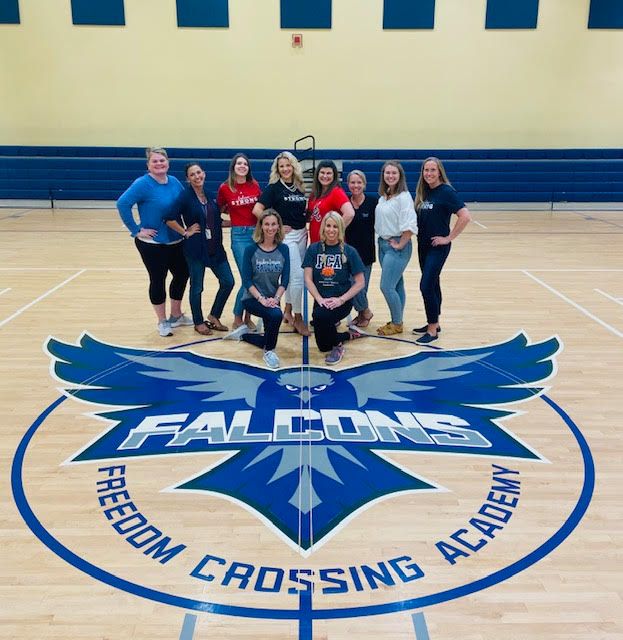
That clarity mattered because it prevented the fragmentation that kills culture initiatives at many schools. Instead of launching a dozen programs and hoping some would stick, FCA built everything around a single philosophy that Julie Hayden, then a first-grade teacher and now the district's coordinator for student support services, summarizes in four words: Maslow before Bloom. Meet the child's basic needs for safety, belonging, and esteem before expecting academic performance.
The three pillars reinforced each other. Capturing Kids' Hearts created the relational foundation. PBIS with LiveSchool gave teachers a structured way to recognize and reinforce positive behavior. PLCs ensured teachers were collaborating on instruction with shared data. None of the three existed in isolation, and that interconnection is what made the culture feel genuine rather than performed.
The FCA Way
FCA's behavior expectations are captured in a schoolwide acronym: Focused on Safety, Committed to Responsibility, Always Respectful. Every student and family in the building knows these three pillars. Julie describes a test she applies informally: if you stop a student in the hallway and ask what the FCA Way stands for, they can tell you. If you ask a parent at pickup, they can tell you. When an expectation is that deeply ingrained, it stops being a poster on a wall and becomes part of the community's identity.
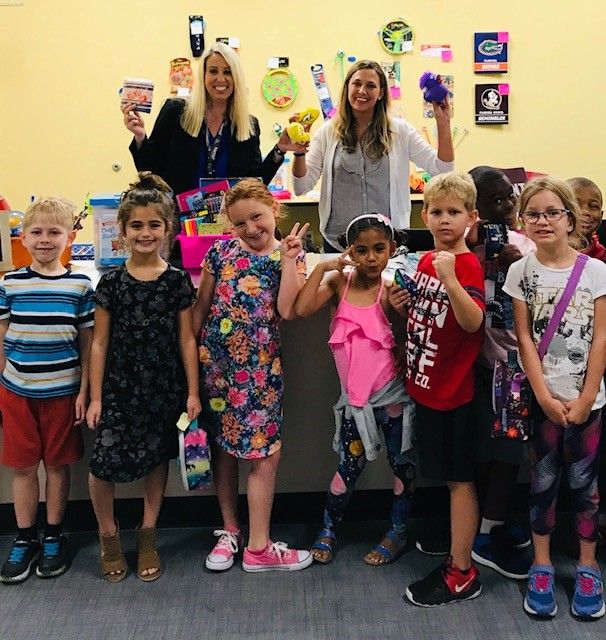
Teachers use LiveSchool to reinforce the FCA Way in real time. If a class is struggling with responsibility, the teacher might run a targeted points challenge for a week: every student who arrives prepared gets immediate recognition. Julie has seen teachers take a single struggling expectation, make it the focus of a schoolwide push, and then watch that expectation dominate hallway conversations for days afterward. The specificity is what makes it work. Instead of a vague call to "be better," the school identifies the exact behavior and floods it with attention and reinforcement.
During PBIS walkthroughs, Julie checks whether expectations are posted in common areas, whether those expectations are actively communicated to students, and whether there are rewards tied to demonstrating them. Posting rules is necessary but insufficient. The expectations have to be taught, modeled, and recognized repeatedly until they become automatic.
Data That Reshapes the Schedule
One of the most consequential uses of LiveSchool data at Freedom Crossing was not a reward or a recognition. It was a schedule change. The administration noticed through discipline data that one grade level experienced a spike in office referrals during a specific window: immediately after lunch, when students transitioned to resource classes. The data made the pattern undeniable, and the school adjusted the master schedule to break up that problematic sequence.
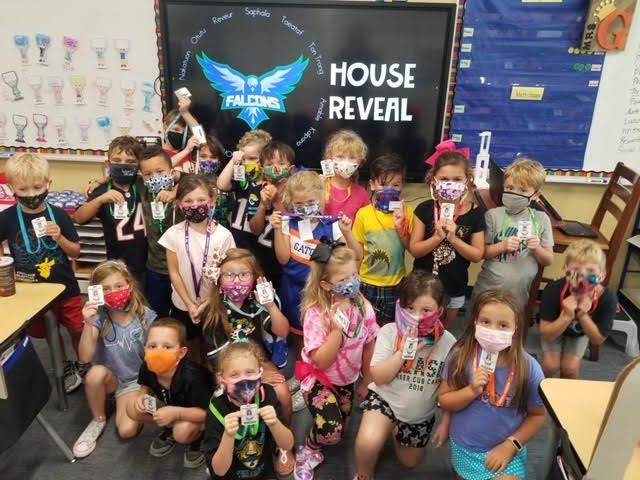
The same data-driven approach applied to the middle school wing. When FCA operated on a K-8 model, the middle schoolers originally had first lunch, which started around 10:27 in the morning. The data showed that behavior issues climbed steadily through the afternoon after that early lunch. The school moved middle school to last lunch, pushing it closer to the end of the day, and the afternoon referrals dropped. These were not guesses. They were schedule redesigns driven by LiveSchool reports that broke behavior data into time-of-day chunks.
Julie believes that sharing this discipline data openly with teachers is one of the most powerful things a school can do. When a teacher with frequent behavior issues sees that their LiveSchool usage is low compared to a colleague whose classroom runs smoothly and whose usage is high, the correlation becomes difficult to ignore. The data does not accuse. It invites reflection.
Meeting Every Student Where They Spend
FCA discovered early that the same reward system cannot serve a kindergartner and an eighth grader. Primary students loved the classroom treasure chest, sitting in the teacher's chair, writing with markers for a day, or bringing a stuffed animal to school. Julie would sit with her first graders and ask them to brainstorm free rewards, and they would come up with ideas she never would have considered on her own, like reading a book to their former kindergarten teacher's class.
Middle schoolers operated on a completely different economy. They wanted food. Specifically, they wanted Chick-fil-A. The school arranged a monthly Chick-fil-A lunch that cost 500 LiveSchool points, and it became one of the most powerful motivators in the building. Snacks, drinks, and off-campus food items drove middle school engagement far more than trinkets or treasure chests ever could.
The end-of-year raffle became one of the most anticipated events at FCA. Rising ninth graders could save their points all year and spend them on spirit wear from their future high schools, Bartram Trail and Creekside. Stanley cups, Squishmallows, and Croc charms rotated through the store based on whatever students were currently obsessed with. Julie learned to never assume what would sell. Mustache stickers, which she expected no one would want, sold out instantly and appeared on every face in the building for a week.
Teachers as Differentiated Learners
Julie approaches teacher buy-in the same way she approaches student engagement: everyone is differentiated. Some teachers are natural early adopters who will try anything. Others are content-focused educators who feel that every additional initiative steals time from instruction. Both are valid starting points, and both require different strategies.
For resistant teachers, Julie's approach is practical rather than philosophical. She asks what specifically feels burdensome. Is it the time to enter points? There are strategies for that: cup methods where students earn physical tokens that translate to points at the end of the period, clipboard systems, or batch entry during transitions. Is it the visibility of the app? Not every teacher wants LiveSchool displayed on the TV. Some prefer to enter points quietly from their phone. The goal is to find the workflow that fits the teacher rather than forcing every teacher into the same workflow.
One school in Julie's district ran an ice cream social exclusively for teachers whose LiveSchool usage was strong. It was a small, inexpensive gesture, but it applied the same logic to adults that LiveSchool applies to students: recognize the behavior you want to see more of. The incentive was not about ice cream. It was about acknowledgment.
A Village Working Together
Julie's billboard message, if she could put one up for every educator to see on their morning commute, would read the same four words she has been saying for years: Maslow before Bloom. It is not a slogan. It is an operational philosophy. If a student does not feel safe, known, and valued, no amount of rigorous instruction will reach them. The academic expectations come after the human ones are met.
Freedom Crossing Academy proved this at scale. A K-8 campus with 2,000 students and 200 staff members built a culture so strong that Julie's own daughter, when surprised with a trip to Disney World on a school day, cried because she did not want to miss school. Julie texted her principal immediately. The Maslow-first approach was working so deeply that a child preferred her school community over the most famous theme park in the world.
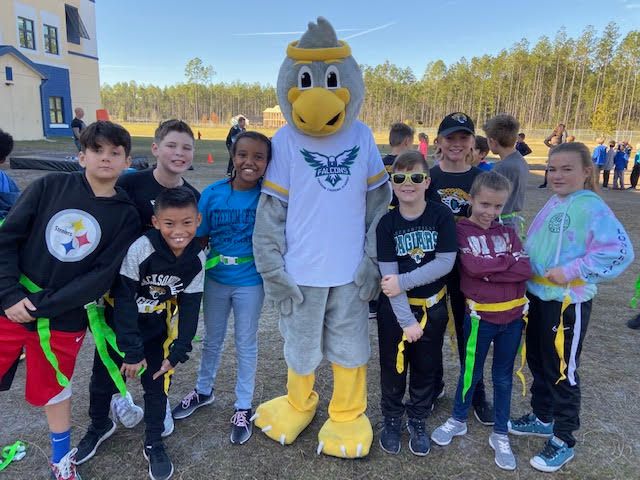
Now in her district role, Julie carries that proof to every campus she supports. She invites skeptical schools to visit Freedom Crossing and see the culture in action, from the primary classrooms where first graders read to kindergartners as a reward, to the middle school wing where eighth graders save points all year for high school spirit gear. The system works because it was never about the points. It was about building a village where every student, teacher, parent, and cafeteria worker feels like they belong to something worth showing up for.
More stories you might like
How PS/IS 119 Made Every Adult a Point-Giver and Raised Student Belonging 14%
When Principal Asia Robinson Atkins arrived at PSIS 119 in Queens during the pandemic, she found a K–8 school of nearly 1,300 students where third graders didn’t know seventh graders existed. She built a four-house system, recruited four teacher-coordinators, and gave every adult in the building – from kitchen staff to school safety agents – the power to award points. In year two, student belonging rose 14% and the school recorded 218,000 positive behavior points.
How the Dulles School of Excellence Built a Safe Haven with 35,000 Positive Interactions
On Chicago's South Side, where 90% of students live in a neighboring housing project, Culture and Climate Coordinator Larry Williams built a three-tier PBIS and SEL program that achieved 100% staff adoption and logged over 35,000 positive interactions – supported by a Tiger Store, House competitions, and weekly parent Recaps.
How Herbert Carter Built Student Voice with Live Broadcasts and Personality Houses
Assistant Principal Johan Gray and his team turned a K–8 magnet school into a media-savvy, personality-driven community. With daily YouTube Live announcements, a corny joke segment that costs just LiveSchool points, and a house system sorted by character traits instead of random assignment, Herbert Carter has seen discipline workloads drop dramatically while student engagement soared.