
Student Success Center
See how the Student Success Center uses a location-based rubric to track behavior during lunch and outside time.
Submitted by Joshua Hubbard, Teacher
About Their Behavior Rubric
The Student Success Center is an alternative school in Alexander County Schools in North Carolina. Students are placed in the program for a short period of time with the goal of reintegrating into their home school.
Because of this, the team at Student Success Center focused on emphasizing appropriate behavior for everyday activities when creating their behavior rubric. They also have kept it simple so as not to overwhelm students and teachers.
Location Specific
A few of the categories in their rubric are based on location. This is to make it easier for them to collect data.
They chose the two environments that have the least amount of structured time - lunch and outside. By identifying behaviors within each of these locations, the team can see how often students are receiving positive recognition as well as when they are not meeting expectations.
This data also helps the team identify when a student can be placed back into their home school.
Generic Categories
The team at Student Success Center also created two generic categories - Bonus Points and Negative Behavior.
The Bonus points category includes two behaviors for 10 and 15 points while the negative behavior category has 5 red behavior buttons worth various amounts of points. The reasoning for these generic categories is so that the team can easily document when a student does something positive or negative that isn't specific to the rubric.
The teachers are still able to document it in LiveSchool, include a comment to provide more data/context, and then ensure the students are awarded the points. Or, in the case of negative behaviors, the students will lose those points.
The team at Student Success Center has found that keeping their rubric simple and generic makes it easier for staff to document the behaviors in LiveSchool.
More Location-Based rubrics
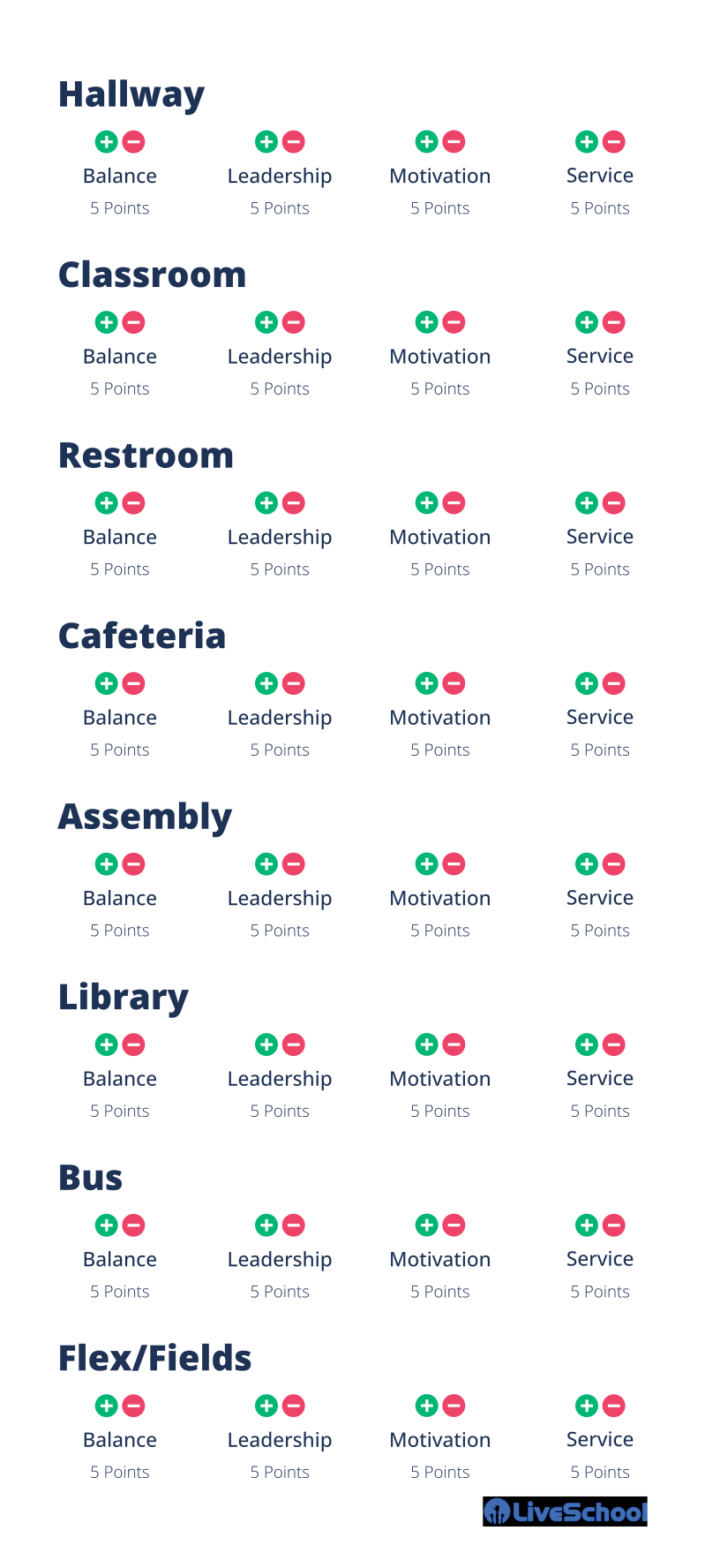
Bluffton Middle School
Bluffton designed their PBIS matrix around their cultural values: Balance, Leadership, Motivation, and Service.
Creswell Middle Magnet
Creswell uses PBIS to improve behavior AND school culture. With their rubric, students earned 600K points this year
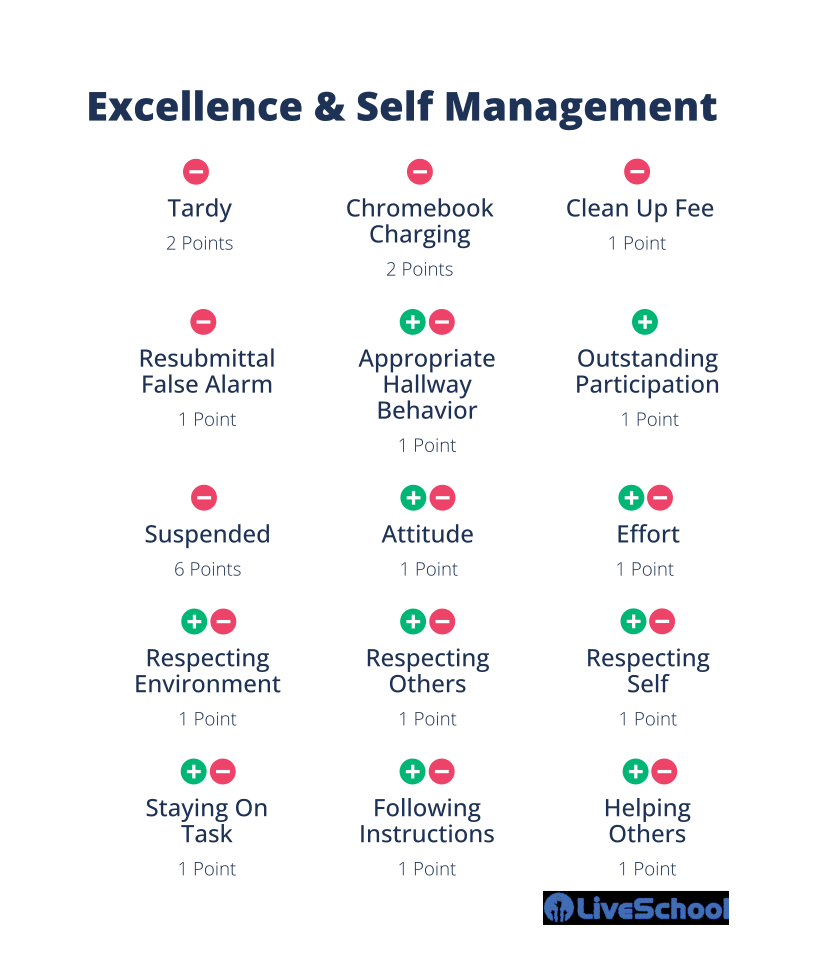
Crystal Middle School
This is a classroom-based behavior rubric developed by a teacher to encourage "Excellence & Self Management."
Ready to build your own behavior rubric?
LiveSchool makes it easy to create, customize, and manage your school's behavior rubric.