
5 Habits That Keep a Behavior Points System Working All Year
Two Chicago teachers built opposite behavior points systems and landed on the same five habits. What site leaders can copy from Wadsworth STEM and Horace Mann.

On this page
Cynthia Brawner teaches third grade ELA, social studies, and writing at Wadsworth STEM in Chicago's Woodlawn neighborhood. A couple of years ago she noticed the daily attendance behavior in her school's rubric could be worth up to five points, not just one.
So she asked herself:
"How do we really motivate the kids for attendance?"
Cynthia Brawner, 3rd grade, Wadsworth STEM
Then she built an answer. Across the district at Horace Mann, second grade teacher Tiffany Norwood solved the same problem from the opposite direction. The two met for the first time on a webinar this summer, and they run almost nothing else the same way.
Whether your school is rolling out PBIS for the first time or is in year fourteen, the distance between the plan and the Tuesday comes down to a handful of habits. Five show up in both rooms:
- Reward the habits, not just the behavior
- Let consistency compound across the week
- Give the points somewhere to go
- Make it visible beyond one classroom
- Back it with leadership that responds
Each one is a decision a school leader makes. The Teacher tip in each section is the version to hand your staff.
Habit 1: Reward the Habits, Not Just the Behavior
"[LiveSchool] really does look at habits, not so much behavior wise, like whether you're bad or good, but how you carry yourself."
Cynthia Brawner, 3rd grade, Wadsworth STEM
Cynthia's rubric goes well past conduct. It incentivizes the actions she wants to see in each student:
- Arriving on time and in uniform
- Having supplies ready
- Class participation
- Collaboration, creativity, and critical thinking
Collaboration has a rule attached. A student earns it for helping a classmate without handing over the answer.
"Helping doesn't mean give the answer. Helping means to show how to get the answer."
Cynthia Brawner
Creativity is judged against that student's own baseline, not the class's. And there is no negative attached to it. A student either earns the point or doesn't.
Teacher tip
Rename one behavior from what you don't want to what you do want, and award it tomorrow morning.
Habit 2: Let Consistency Compound Across the Week
A system that pays out for one good day teaches students to have one good day, then coast until the next payout.
Cynthia raised the value of the streak. Same behavior every day, rising value:
- Monday: 1 point for attendance, 1 point for the streak
- Tuesday: 1 for attendance, 2 for the streak
- Wednesday: 1 and 3
- Thursday: 1 and 4
- Friday: 1 and 5
A student who comes all five days earns 15 streak points on top of the 5 for showing up. She ran it past us before rolling it out, mostly to check she wasn't gaming her own system.
"That was legal, right?"
Cynthia Brawner
It was. Her read on what happened next:
"Those were the points that got them in the door. They wanted their points."
Cynthia Brawner
Tiffany raised the price of the reward instead.
- Her Fun Friday store threshold: 125 to 150 points
- Her daily ceiling: about 25 points
- Balances carry across weeks
The arithmetic is deliberate. One week of points is not enough to shop.
"It had to be accumulated over the course of the time. Not just okay, I did good this week. You had to earn it."
Tiffany Norwood, 2nd grade, Horace Mann
Both fixed the same problem with math instead of a lecture. Neither teacher needed a new tool. Every rubric already lets you award the same behavior as 1 point or as 5.
Three decisions worth making school-wide:
- What a behavior is worth on day five compared to day one
- Whether the reward threshold clears a single strong week
- Whether staff even know the 1-to-5 range exists
Cynthia found it on her own. Her assumption was that her colleagues had not.
Teacher tip
Pick one behavior and make it worth more each consecutive day.
Habit 3: Give the Points Somewhere to Go
Both teachers ran an open-ended store for a year. Both quit for the same reason.
- Cynthia would announce shopping, get busy, and push it to Monday, then Tuesday
- Tiffany was fielding requests mid-lesson
Now it runs on a rhythm:
- Students shop every Friday, or Thursday on a short week
- Class stops for 10 minutes
- Cynthia fills orders over the weekend
- Everything gets handed out Monday
No hunting for items while the class waits.
There is one gate on it. A student has to have stayed on task that week to shop at all, which keeps the reward tied to the work.
Teacher tip
Plan a weekly spending day, and add one reward that costs you nothing.
Habit 4: Make It Visible Beyond One Classroom
When points only come from one teacher, students read it as that teacher's rule. When they come from every adult in the building, it reads as how the school works. The two schools get there differently.
At Wadsworth, every adult can award. The school is widening access this year so points follow students everywhere:
- Paraprofessionals
- The lunchroom manager
- Custodial staff
That only matters if students know about it, so Cynthia spends week one showing her class the back end, where they can see which adults are awarding what.
"Students understood it wasn't just me giving them points, that other educators in the building were also giving them points."
Cynthia Brawner
The house standings run in the school newsletter, and Cynthia shows her class where they placed. Third grade led for most of last year, then kindergarten overtook them and finished about 20,000 points ahead.
"They're four and five years old."
Cynthia Brawner, on kindergarten taking the lead
Seeing the standings every week is also what reminded her to enter the points sitting on her sticky notes. No staff meeting does that.
Horace Mann runs it over the intercom. Teams there are grade bands rather than single rooms, primary, intermediate, and middle school, and the highest total wins extra recess or a pizza party. Results are read out to the whole building, framed as congratulations rather than a ranking of who lost.
- One classroom can't win alone, so students pull for rooms they aren't in
- No single teacher has to organize it
"The kids were really excited when they'd hear second grade had the highest points this week. It's a community effort. We all had a part in this."
Tiffany Norwood
Teacher tip
Ask for standings in the newsletter and show your class where they placed.
Habit 5: Back It With Leadership That Responds
The parts a teacher cannot control are the ones that decide whether any of this lasts.
Cynthia's principal, Dr. Rashid Shabazz, turns requests around inside a day. When the store first launched and she hit an approval wall, she caught him at lunch and had an answer by the next morning.
"If I ever went to our principal, Dr. Shabazz, with an issue, by the next day it was fixed."
Cynthia Brawner
He also adds new point categories as school goals shift, and varies the behaviors deliberately so the rubric doesn't go stale over a year.
In her framing, a glitch doesn't just block a task. It breaks the rhythm, and the rhythm is very hard to get back.
Teacher tip
Bring your admin a specific request: a behavior to add, or a fix you need.
More Ideas Worth Stealing
Between them, Cynthia and Tiffany have run points systems for years. Four more things from their rooms, past the five habits.
Run two currencies. Cynthia keeps her own classroom store alongside the LiveSchool store, and the two interact in an unusual way. LiveSchool points unlock a purchase; they do not pay for it. The price is in classroom cash, realistic-looking bills stamped NOT LEGAL TENDER, and students have to remember to bring it on Friday. A pair of earbuds costs a few points to access and a hundred dollars to buy.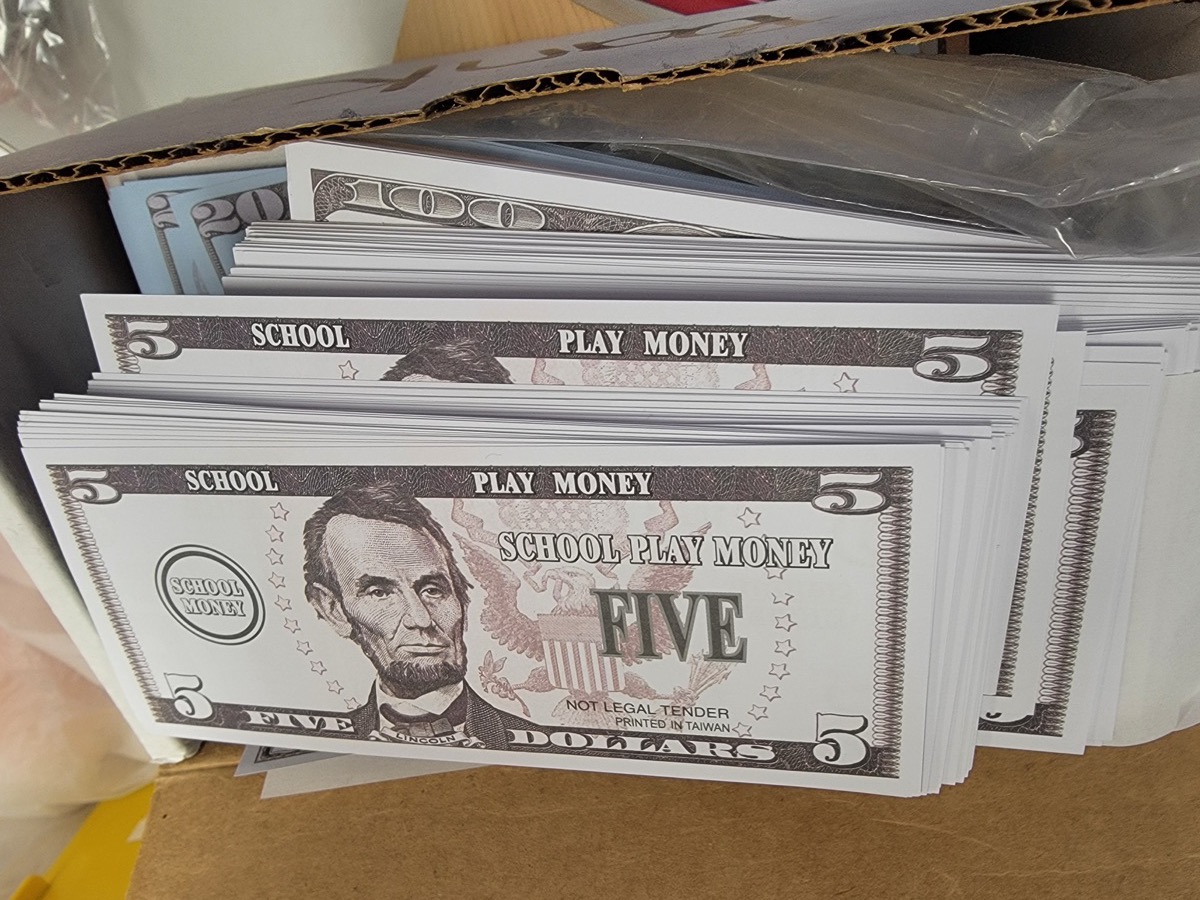
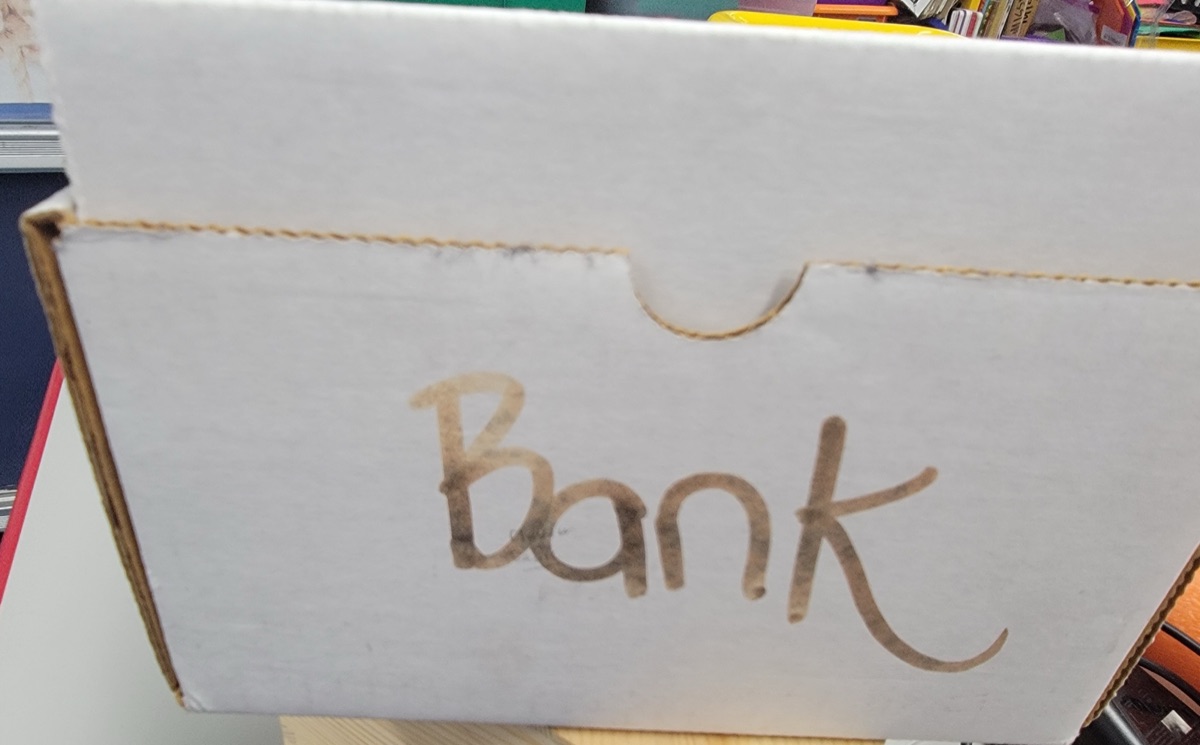
Her stock is mostly Donors Choose surplus, and the rewards that cost nothing are the ones students ask for anyway:
- Lunch with the teacher
- Co-teaching a segment of a lesson
- Five extra minutes on a Chromebook
- Arriving early for talk time before the room fills up
Don't let a bad day become a bad week. Tiffany used to deduct points, and watched her kindergartners give up entirely.
"She's always taking points away from me, so why should I even try?"
What Tiffany's students told her when she deducted points
She stopped two years ago. Negatives became red points: they name the behavior, show up for families, and start a conversation, but they never touch the balance. Whether negatives subtract is a school-level setting, not a teacher preference. If your staff report that certain students have checked out of the system entirely, that setting is the first place to look. Cynthia reaches the same place from the other side. In her class no student ends the day at zero, because attendance points accrue no matter how the morning went, and a negative can be climbed back the same day through collaboration or completed work.
One of her students told her, to her face, "I don't like you. I hate you." She gave him a point for being honest. He came to school every single day that year.
"Whether you do something good or bad, I'll just talk to you."
Cynthia Brawner
Hand it to a student. Tiffany names a teacher helper each week who awards the points, starting around midyear once the class has watched her use the rubric. The rules are stated out loud: no points for friends, no red points for people you don't like, work with fidelity. She checks behind them, and students know it. It also solves coverage, since the helper and a backup report on the day when she is out. The tell that it worked is that the class corrects her when a testing week gets away from her.
"Mrs. Norwood, you forgot to do the LiveSchool."
Tiffany Norwood's second graders, during a testing week
Ride a routine you already have. The hardest part is not the rubric, it is remembering to open the app. Cynthia opens LiveSchool before she takes attendance, runs it on two screens so students hear the chime from across the room, and keeps a clipboard of sticky notes to enter later.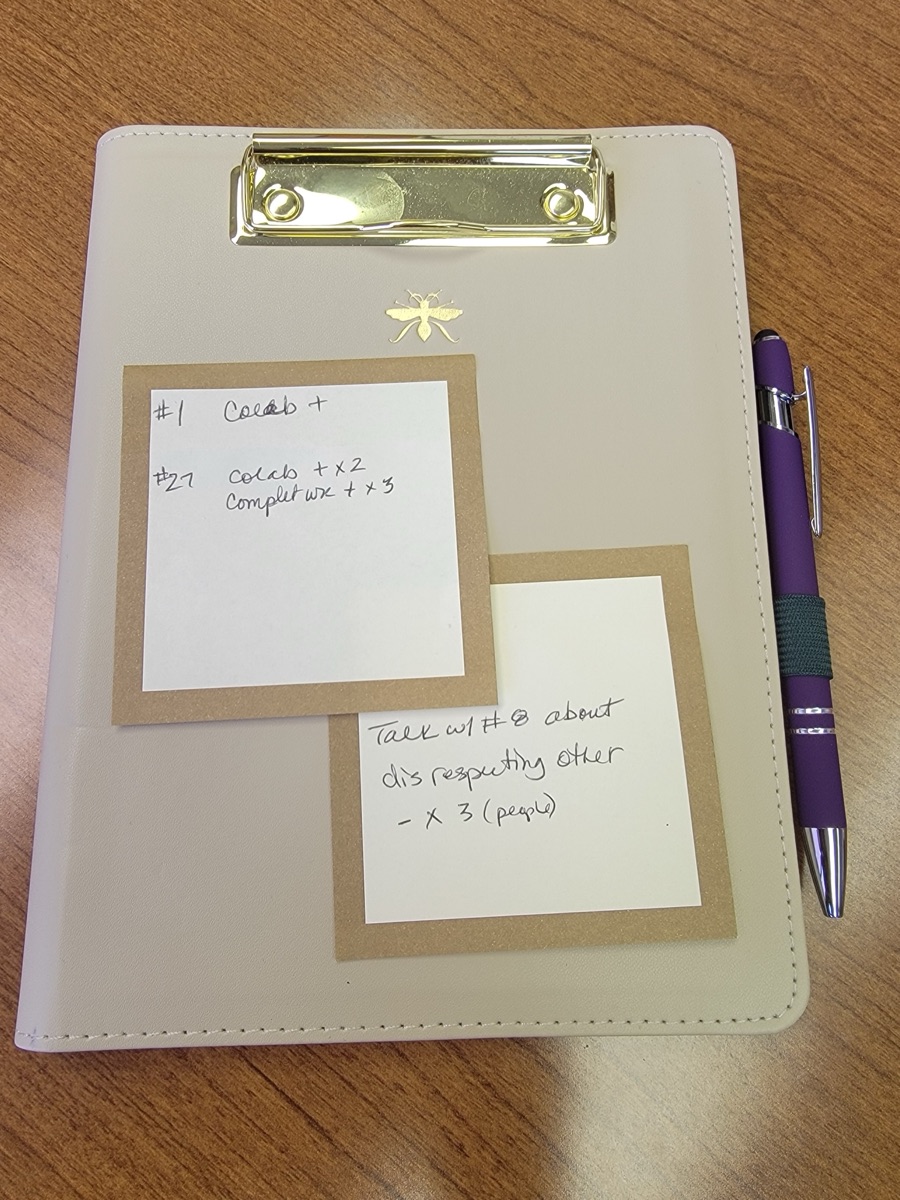
Her advice to a teacher starting next week is about a pair of shoes. New ones pinch. You wear them anyway, and after a week you stop noticing.
Try This at Your School
- Name the habits you want. Write down the five things you want to see every morning. Those are your behaviors, and they should go past conduct.
- Make consistency worth more. A point on Monday and five by Friday rewards the streak, not the single moment. Start with attendance.
- Pick a spending day. A weekly store beats an open-ended one. It gives the week a finish line.
- Put standings somewhere public. House standings in the newsletter, the hallway, or morning announcements. The competition does the reminding for you.
- Answer your staff fast. When a teacher asks for a behavior to add or a fix they need, turn it around inside a day. The rubric should adapt as the year goes on.
- Let a student run it. Rotate a teacher helper each week. Peer accountability lands harder, and the class will remind you when you forget.
Ready to Make Consistency Worth Something?
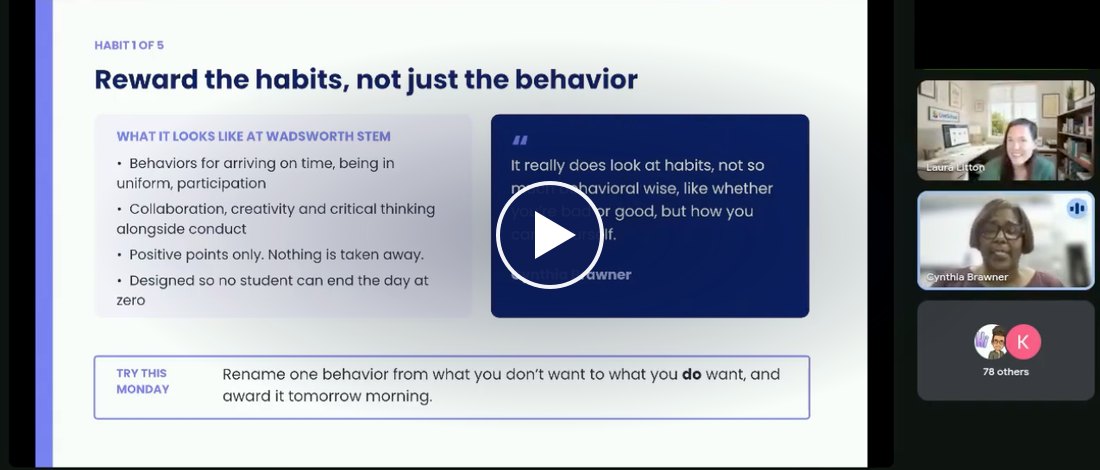
Watch the full session: 5 Habits of High-Performing PBIS Schools: Two CPS Teachers Share What Actually Works, with Cynthia Brawner and Tiffany Norwood.
See how LiveSchool's behavior tracking lets you set point values, decide how negatives behave, and keep every adult in the building recognizing students the same way.
Related posts
From Lunch-Line Logjam to Every-Student Access: How Darby Middle Turned Rewards Into Routine Motivation
Darby Middle expanded access schoolwide with 21 teacher stores, simple routines, and 2,586 student purchases!
Comprehensive List of PBIS Systems and Software (2026)
See the 38 top PBIS tools used by schools to track behavior, motivate students, and communicate with families – from SIS plugins to full platforms.

Recording: Principal Strategies to Get Teacher Buy-In for Behavior Points
Join leaders for a 30-minute webinar showcasing ways to improve teacher buy-in to behavior points.